Posts

AI Optimization Demystified: How Machines Learn Through Math

Optimization in AI: The Mathematical Core of Learning Optimization is the mathematical foundation of everything that makes Artificial Intelligence (AI) and Machine Learning (ML) actually learn . Whether it’s a simple linear regression model or a 100-layer deep neural network, optimization is what drives the model to perform better over time by minimizing error and improving accuracy. In this blog, we’ll deeply explore what optimization really means in AI, why it's necessary, and how it’s done — with a clear focus on gradient descent, loss functions, second-order methods, heuristics, hyperparameter tuning, and much more. 1. What is Optimization in AI? Optimization refers to the process of finding the best possible values of model parameters (like weights and biases in a neural network) that minimize or maximize an objective function. In most AI models, the objective is to minimize a loss function — a function that measures how poorly the model is performing. Mathematically, ...

Calculus: The Core of AI

Image
Calculus in AI: The Hidden Engine Behind Smart Machines When we think about Artificial Intelligence (AI), our minds jump to robots, self-driving cars, or smart chatbots. But rarely do we think of something as humble (and sometimes dreaded) as Calculus. Yet, behind every intelligent system, there's a math engine making it all possible—and that engine is calculus. In this blog, we'll explore how calculus powers AI and statistics in a human-friendly way—no scary formulas, just real-world connections. Why Does AI Need Calculus? AI models learn by reducing errors. But how do they know how much to change, and in which direction? That’s where calculus comes in. Just like we adjust our actions based on outcomes, machines do the same—only they use calculus to guide them. Whether it’s optimizing predictions or updating weights in neural networks, calculus is the secret sauce. The Many Roles of Calculus in AI and Statistics Here are ten key ways calculus is used in AI, explained ...

Essential Probability & Stats for AI

Probability & Statistics for AI  In the world of Artificial Intelligence (AI), understanding probability and statistics is like having the map to navigate uncertainty. Whether you're training a model, analyzing data, or making predictions, these tools help AI reason, learn, and adapt. Let’s break down everything you need to know — in an easy, intuitive way. Why Probability and Statistics Matter in AI? AI systems constantly deal with: Uncertain data (e.g., medical symptoms) Noisy inputs (e.g., user behavior) Decision-making (e.g., whether an email is spam) *  Probability helps AI model uncertainty. * Statistics helps AI learn patterns from data. 1. Basic Concepts of Probability  What is Probability? It’s the likelihood of an event happening. Formula: P ( A ) = Number of favorable outcomes Total outcomes P(A) = \frac{\text{Number of favorable outcomes}}{\text{Total outcomes}} Example: Probability of rolling a 4 on a dice: P...

Crack AI with Linear Algebra – No Math PhD Needed!

Image
Linear Algebra for AI  Why is Linear Algebra Crucial for AI? Linear Algebra is often considered the language of AI. It is the backbone of many AI algorithms and models that process large datasets, including images, text, and speech. Linear algebra helps us turn raw data into usable forms, such as vectors and matrices, making it easier to manipulate, analyze, and draw insights from. In AI, linear algebra helps systems like neural networks, machine learning algorithms, and even image recognition systems to learn patterns and make predictions. Whether you're dealing with word vectors in NLP or performing transformations in computer vision, linear algebra is at the core of it all. Understanding Vectors: The Building Blocks of Data What is a Vector? A vector is essentially an ordered list of numbers. In simple terms, it’s a point or direction in space. Vectors can represent data points, such as a word's frequency in text or the pixel intensity of an image. For example: A 3...

Numbers That Build Intelligence

Image
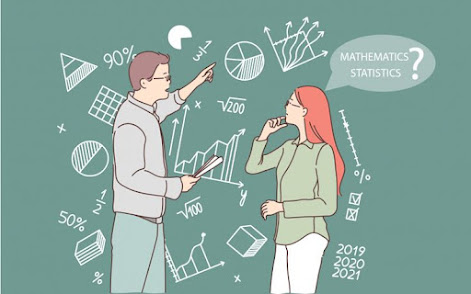
Maths and Statistics for AI – Why They Matter Why Do We Need Math in AI? AI may seem like magic, but underneath it all, it's powered by math and statistics. These aren't just side topics—they form the core of how AI understands, learns, and makes decisions. Whether you're training a machine learning model, building a neural network, or analyzing big data, math is always working behind the scenes. Let’s explore each mathematical pillar one by one to understand what role they play in AI. 1. Linear Algebra: The Language of Data Linear Algebra is the foundation of data representation in AI. AI systems process a lot of data—images, speech, text—and all this data is turned into numbers, most commonly in the form of vectors and matrices . Vectors help represent data points (like a sentence or image pixel values). Matrices are used to perform operations on multiple data points at once. In neural networks, weights, inputs, and outputs are often represented as matric...

AI in Action: How Artificial Intelligence is Shaping Our Everyday Lives

Image
  Real-World Applications of AI: How AI is Transforming Everyday Life Artificial Intelligence (AI) is no longer just a futuristic concept—it’s here, shaping the world around us in ways we never imagined. From recommending what to watch on Netflix to assisting doctors in diagnosing diseases, AI is deeply embedded in our daily lives. But how exactly is AI making an impact? Let’s dive into some real-world applications across various industries and see how AI is revolutionizing the way we live and work. 1. AI in Social Media: Creating Personalized Experiences Social media has become a part of our everyday routine, and AI is working behind the scenes to enhance our experience. Whether it’s suggesting friends on Facebook, curating your Instagram feed, or generating captions on TikTok, AI ensures that you stay engaged. How AI Works in Social Media: Content Recommendation: AI studies your interests and suggests posts, videos, and ads that match your preferences. Chatbots & ...

Types of AI: From Simple Machines to Super Intelligence

Image
  Types of AI: Understanding AI’s Capabilities and How It Works Artificial Intelligence (AI) isn’t just one single thing—it comes in different forms depending on how advanced it is and how it functions. Some AI systems are simple and follow fixed rules, while others are smart enough to learn from experience and improve over time. To make things easier to understand, we can classify AI in two ways: Based on Capabilities – How intelligent the AI is and what level of decision-making it can achieve. Based on Functionalities – How AI processes information and interacts with the world.  Let’s break it down 1. Types of AI Based on Capabilities This category defines how powerful and intelligent an AI system is, from basic systems that follow instructions to advanced AI that may one day match human intelligence. 1. Narrow AI (Weak AI) – AI That Focuses on One Task Right now, all AI that exists is Narrow AI. It is built for specific tasks and cannot think beyond them. This m...